
Sustainable manufacturing goes beyond buzzwords—today, leading manufacturers are fundamentally transforming how products are designed, sourced, and made to minimize environmental impact while improving efficiency and profitability. From innovative material sourcing to ultra-efficient production and zero-waste targets, the drive toward sustainability is real and measurable.
Sustainable Sourcing and Materials
Recycled and Circular Materials
Forward-thinking manufacturers like Aquafil are pioneering circular economy initiatives. Their ECONYL nylon is made from discarded fishing nets and post-consumer waste, processed through advanced chemical recycling so it can be endlessly regenerated into high-quality fibers, carpets, or clothing. Every 10,000 tons of recycled ECONYL saves 70,000 barrels of crude oil—directly cutting carbon use and ocean pollution. Carpet maker Interface partners with Aquafil for modular tile collections featuring 100% recycled yarn, promoting closed-loop product life cycles.
Many companies are incorporating sustainable certification standards. For instance, Forest Stewardship Council (FSC) or RSPO certifications confirm wood and palm oil are sourced without harming biodiversity or local communities. Brands are partnering with certified suppliers to ensure raw material extraction and agriculture sustain ecosystems for the long term.
Bioplastics and Renewable Resources
Chemical giants like BASF are investing in bioplastics such as Ecovio—biodegradable, compostable polymers made from corn starch and other renewable feedstocks—widely used in food packaging or agricultural films. Covestro has created polyurethanes made from organic wastes and even developed fully biomass-derived base chemicals, setting a new bar for reducing chemical sector emissions.
Renewable Energy and Process Innovations
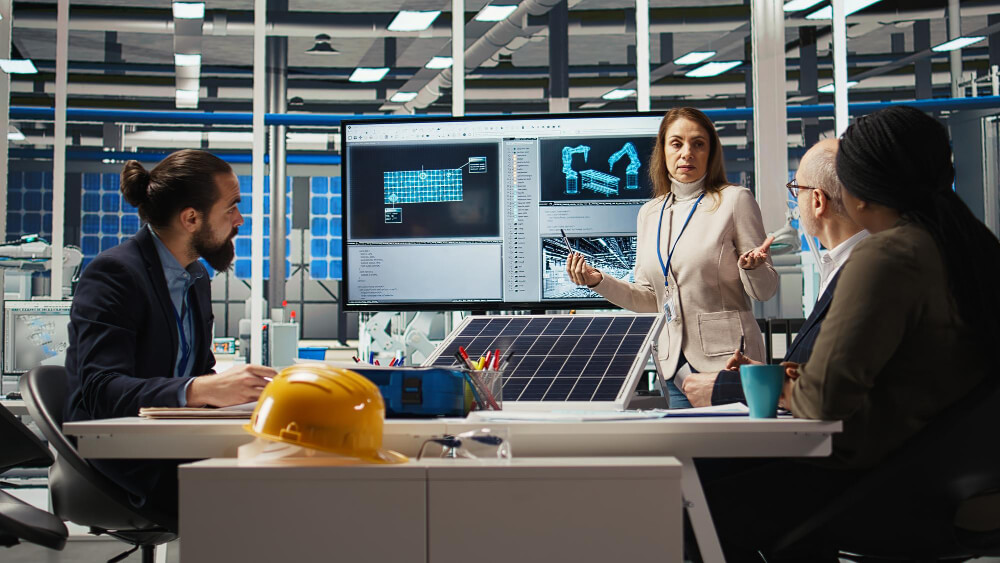
More manufacturers are using solar, wind, and even biogas to power their factories, slashing fossil fuel dependence. Covestro shifted to increased renewable energy input across facilities, reducing its carbon footprint drastically. For example, companies deploy digital monitoring to assess real-time energy use, automatically adjusting HVAC, lighting, and machinery loads to ensure optimal efficiency every minute production is running.
Process improvements—from LED retrofits to heat recovery systems—lower both energy intensity and operational costs. Bechtel, in large-scale construction, uses natural insulating materials like rammed earth in infrastructure projects, drastically reducing embodied carbon.[
Implementing Lean Practices to Minimize Waste
Just-in-Time, Modular, and Circularity
Lean manufacturing practices eliminate excess through just-in-time production (reducing inventory waste) and modular assembly (enabling parts reuse and fast reconfiguration). For example, Patagonia designs products for durability and repairability, even facilitating resale and recycling through take-back programs. IKEA extensively uses bamboo for furniture, a rapidly renewable and easily processed option, reducing the company’s overall resource footprint and enabling circular product loops.
Industrial leaders are also innovating with chemical recycling (e.g., Aquafil’s ECONYL process), where materials are broken down and rebuilt without performance loss, versus mechanical downcycling. This allows for more waste types to be re-absorbed into the manufacturing cycle, driving circularity at scale.
Why These Practices Matter: Business and Environmental Impact
Manufacturers embracing these shifts are seeing not only a healthier planet but stronger brands, improved margins, and a more resilient future.

Welcome to the world of end-to-end digital manufacturing where cutting-edge technology and innovation collide to deliver exceptional products at lightning-fast speeds.
© 2025 ZeQube Technologies, All rights reserved